Avicenna Journal of Clinical Microbiology and Infection. 12(3):129-132.
doi: 10.34172/ajcmi.3660
Original Article
Soil Contamination with Toxocara spp. Eggs in Public Parks of Malayer, West of Iran: Implications for Zoonotic Risk
Ahmad Abolghazi Conceptualization, Data curation, Formal analysis, Funding acquisition, Investigation, Methodology, Project administration, Resources, Software, Writing – original draft, Writing – review & editing, 1, 2, * 
Mohammad Fallah Methodology, Supervision, Validation, Visualization, Writing – original draft, 1
Hajar Mikailo Conceptualization, Data curation, Funding acquisition, Methodology, Writing – original draft, 1
Bahman Maleki Conceptualization, Funding acquisition, Validation, Writing – original draft, 3
Author information:
1Department of Medical Parasitology, School of Medicine, Hamadan University of Medical Sciences, Hamadan, Iran
2Student Research Committee, Hamadan University of Medical Sciences, Hamadan, Iran
3Skin Research Center, Shahid Beheshti University of Medical Sciences, Tehran, Iran
Abstract
Background: Toxocariasis is a prevalent zoonotic infection caused by Toxocara canis and Toxocara cati. This parasite is transmitted via the ingestion of embryonated eggs present in contaminated soil, often through accidental ingestion during outdoor activities. Globally, the average soil contamination rate of Toxocara spp. eggs is estimated at 21%, while the corresponding rate has been reported to be 16% in Iran. Given the limited data on Toxocara spp. infections in both humans and animals in Malayer and considering the public health importance of toxocariasis, the present study was conducted to evaluate the prevalence of Toxocara spp. eggs in soil samples collected from public parks in Malayer.
Methods: A total of 200 soil samples were collected from 10 public parks in Malayer in 2023. The samples were gathered from a depth of 2–5 cm above the soil surface and subsequently transported to the parasitology laboratory for analysis. The environmental conditions of each sampling site were also documented. To detect Toxocara spp. eggs, the flotation method with saturated sugar water was used, and the eggs were examined under a light microscope at×40. The obtained data were analyzed using SPSS.
Results: Of the 200 soil samples analyzed, 16 (8%) tested positive for Toxocara spp. eggs, while the remaining 184 samples (92%) were negative. No contamination was detected in two of the ten public parks (20%), whereas the other eight public parks showed varying levels of contamination.
Conclusion: Although the prevalence of Toxocara spp. egg contamination in the public parks of Malayer is lower than in other regions, the presence of dogs and cats in the parks poses a potential health risk for toxocariasis to the public.
Keywords: Toxocara spp., Park soil, Contamination, Malayer
Copyright and License Information
© 2025 The Author(s); Published by Hamadan University of Medical Sciences.
This is an open-access article distributed under the terms of the Creative Commons Attribution License (
https://creativecommons.org/licenses/by/4.0), which permits unrestricted use, distribution, and reproduction in any medium, provided the original work is properly cited.
Please cite this article as follows: Abolghazi A, Fallah M, Mikailo H, Maleki B. Soil contamination with Toxocara spp. Eggs in public parks of Malayer, west of Iran: implications for zoonotic risk. Avicenna J Clin Microbiol Infect. 2025;12(3):129-132. doi:10.34172/ajcmi.3660
Introduction
Human toxocariasis is a widespread helminthic infection and a neglected tropical disease. Its transmission cycle continues through direct or indirect contact between humans and dogs or cats (1). Public parks, as frequently visited communal spaces, accommodate a large number of individuals daily who engage in various activities, such as children’s play, exercise, and hobbies. Concurrently, the increasing population of stray animals, particularly dogs, as well as the growing tendency to keep pets (e.g., dogs), has led to more frequent interactions between animals and humans in public spaces, such as parks (1,2).
Environmental variables, such as humidity, temperature, and park hygiene, may influence egg survival and transmission dynamics. Among these, certain species of cestodes and nematodes require direct contact with the soil to complete their life cycles. Toxocara spp., as medically important nematodes, depend on soil as an essential environment for the maturation and transmission stages of their life cycle. Definitive hosts for Toxocara canis and Toxocara cati include canids and felids, particularly stray or pet dogs and cats, which are recognized as key sources of infection to humans (3). These parasites contaminate the environment by shedding eggs that are excreted in the feces of infected animals, leading to the dissemination of eggs in the soil (4,5). The presence of Toxocara spp. eggs in the soil is essential for the transmission and pathogenicity of this parasite. Toxocara spp. eggs can remain viable in the soil for several years, especially in moist and shaded environments with moderate temperatures. Soil contamination with Toxocara spp. eggs is recognized as a key factor in human infection (6). Humans may accidentally acquire the infection through the ingestion of Toxocara spp. eggs with contaminated soil and uncooked vegetables, resulting in a zoonotic disease known as visceral larva migrans (7). Toxocariasis in humans can manifest as visceral larva migrans, ocular larva migrans, or neurological symptoms, such as eosinophilia, hepatomegaly, and visual impairment (7). The widespread presence of stray and domestic animals in public areas, especially unfenced parks, significantly contributes to the risk of soil contamination with helminth (8). A systematic review and meta-analysis indicated that the global prevalence of soil contamination with Toxocara spp. eggs exhibits substantial regional variations, with an estimated average of approximately 21%. In contrast, systematic studies report a 16% soil contamination rate in parks in Iran (8,9). Given the relatively frequent occurrence of Toxocara spp. eggs in the soil, the close contact between humans and contaminated sources, and the public health significance of identifying local contamination levels, evaluating soil contamination in public parks is essential. To date, to the best of our knowledge, no studies have investigated soil contamination with Toxocara spp. eggs in the public parks of Malayer. Therefore, this study aims to assess the extent of soil contamination in public parks in Malayer with Toxocara spp. eggs.
Materials and Methods
Using a purposive sampling method, 10 public parks were selected from approximately 55 parks in Malayer from April 2022 to March 2023. The selection aimed to represent various geographic areas of the city (north, south, east, west, and central regions) and was based on factors such as park size, level of public use, and accessibility. None of the ten studied public parks was fenced to prevent animal entry, and all had stray dogs and cats. An equal number of samples (20 per park) were collected from each of the ten parks, using a uniform sampling strategy (200 soil samples, 200 g each, depth 2–5 cm). The samples were air-dried overnight, crushed, and sieved (200 μm and 300 μm), then mixed with distilled water and filtered through triple-layered gauze. After centrifugation at 2000 rpm for 5 minutes, the supernatant was discarded, and the sediment was washed with saline solution. A second centrifugation was followed by mixing with saturated sucrose (specific gravity 1.2 g/cm³) and centrifugation at 15,00 rpm for 15 minutes. The tubes were topped with sucrose and covered with coverslips, and five slides per sample were examined microscopically (100 × and 400 × ). All results and related data were documented for analysis (10).
Results
Out of 200 soil samples, 16 (8%) tested positive for Toxocara spp. eggs, while 184 (92%) were negative. Contamination was found in 8 of the 10 public parks, with Khalaban and Bam-e Malayer public parks demonstrating the highest contamination rates (4/20 samples, 20% each). Egg counts per microscopic field ranged from 1–2 to 2–4 eggs. Specifically, 6 (37.5%), 5 (31.25%), 3 (18.75%), and 2 (12.5%) samples had 1–2, 1–3, 1–4, and 2–4 eggs, respectively (Figure 1). Seasonal variation was noted, with contamination peaking in summer (9 samples) while being the lowest in winter (1 sample) (Table 1).
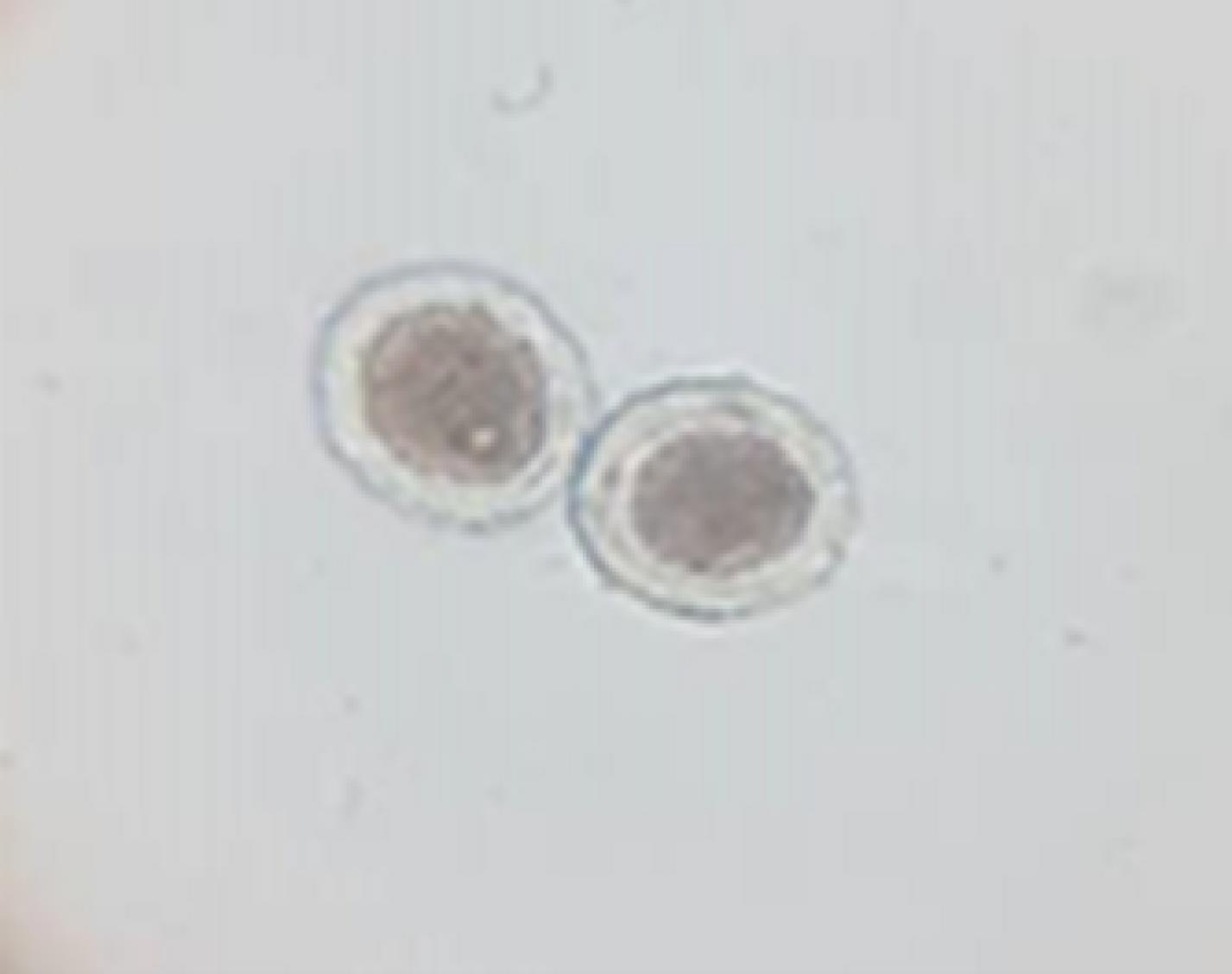
Figure 1.
Toxocara spp. Eggs in Soil Sample from Public Park, Malayer
.
Toxocara spp. Eggs in Soil Sample from Public Park, Malayer
Table 1.
Prevalence of Toxocara spp. Eggs in Soil Samples From Public Parks in Malayer
|
Malayer Region
|
Number Parks Examined
|
Number Positive parks (%)
|
Number eggs Recovered (200 g)
|
Number Positive Parks (%) Based on Season
|
|
Spring
|
Summer
|
Autumn
|
Winter
|
| 1 |
5 (50%) |
4 (80%) |
3 |
15% |
55% |
24% |
6% |
| 2 |
5 (50%) |
4 (80%) |
2 |
17% |
51% |
23% |
9% |
Discussion
Toxocariasis, a significant zoonotic disease, is becoming an increasing public health concern due to the expanding stray dog population, the growing popularity of pet ownership (particularly dogs and cats), and the absence of distinct clinical symptoms in humans (11,12). Environmental parameters, such as temperature and soil moisture, were recorded, and the samples were processed promptly to minimize loss of parasite viability. Furthermore, the main transmission routes include the ingestion of embryonated eggs through contact with contaminated soil, direct contact with dogs and cats, consumption of contaminated raw vegetables, and geophagia in children (13,14). The access of stray dogs to public parks in Malayer is facilitated by the lack of fences around these public parks, coupled with their proximity to rural areas, orchards, and agricultural lands. As a result, parks have become both recreational spaces and shelters for stray dogs and cats (15). In the current study, Toxocara spp. eggs were found in 8% of soil samples collected from public parks in Malayer. Comparable studies conducted in different regions of Iran and other countries have reported varying prevalence rates of Toxocara spp. eggs in soil samples (16,17). A recent study performed in Yasuj demonstrated a 7% contamination rate in the soils of urban parks (18), while another study in Urmia indicated an infection rate of 7.8% (19). In Shiraz, 6.3% of the samples were positive. The degree of contamination varied across different locations and seasons. In our study, the maximum number of eggs observed per positive sample was 4, which is lower than the results reported in some similar investigations. Variations in egg counts (1–4 per microscopic field) may reflect differences in the intensity of local contamination, which could correspond to the frequency of defecation by infected animals in specific areas. For instance, the results of a study performed in Yasuj revealed up to five eggs per 100 g of soil, which conforms to our findings. In a study conducted in Prague, up to 12 eggs per 100 g of soil were found, with a mean of 6.2 ± 3.2 eggs (20). A Spanish report detected 16.7 eggs per 100 g of soil (21). The higher egg counts in these studies may reflect a greater intensity and prevalence of contamination in those areas. The contamination rate observed in our study is relatively consistent with the findings reported in certain Iranian cities, such as Yasuj (7%), Shiraz (6.3%), and Urmia (7.8%), as well as with reports from other countries, including Ireland (6.5%), Argentina (7.2%), and London (6.3%) (9,17). In contrast, significantly higher contamination rates have been observed in Khorramabad (63.6%), Isfahan (28.6%), and Abadan (63.3%). Similarly, several countries, including Turkey (63%), Spain (67%), Brazil (53%), Japan (92%), and Germany (78%), have confirmed notably higher levels of contamination (9,16,17,22). The lower contamination rate (8%) in Malayer may be due to a relatively lower population of stray animals, climatic factors unfavorable for egg survival, or better public hygiene practices compared to highly contaminated regions. Several factors can explain these discrepancies, including the local population of stray dogs, regional infection rates among dogs and cats, climatic conditions such as temperature and humidity, soil type, and the availability of suitable environments for stray animals in public spaces, open agricultural lands, and unfenced parks. Contamination peaked during the summer and declined in the winter. This variation may be related to seasonal differences in temperature, humidity, and increased human and animal activity during warmer months. Additionally, the timing) season) of sample collection and the quality of laboratory procedures may play a role. Warmer temperatures and higher humidity during summer may enhance the development and survival of Toxocara eggs, while cold winter conditions may reduce egg viability, contributing to seasonal variation. The absence of fencing in all studied parks likely facilitates the entry of stray animals, thereby increasing the risk of soil contamination with Toxocara spp. eggs. Cultural differences in pet ownership practices between Iran and other countries can also provide a reasonable explanation for the observed variations in contamination rates.
Conclusion
The detection of Toxocara spp. eggs in 8% of park soil samples in Malayer highlights a public health risk. The findings corroborate those of similar studies in Iran and abroad, though prevalence varies due to factors like climate, stray animal populations, and pet ownership behaviors. Public health strategies, such as monitoring and controlling stray animal populations, regularly deworming the pets, and implementing soil decontamination protocols in parks, are essential to mitigate the risk of toxocariasis.
Acknowledgements
The authors would like to express their sincere gratitude to the Student Research Committee of Hamadan University of Medical Sciences, Hamadan, Iran, for their valuable support and assistance throughout the course of this study.
Competing Interests
We declare no competing interests.
Ethical Approval
Not applicable.
Funding
None.
References
- Woodruff AW. Toxocariasis. Br Med J 1970; 3(5724):663-9. doi: 10.1136/bmj.3.5724.663 [Crossref] [ Google Scholar]
- Magnaval JF, Glickman LT, Dorchies P, Morassin B. Highlights of human toxocariasis. Korean J Parasitol 2001; 39(1):1-11. doi: 10.3347/kjp.2001.39.1.1 [Crossref] [ Google Scholar]
- Martínez-Barbabosa I, Vázquez Tsuji O, Cabello RR, Cárdenas EM, Chasin OA. The prevalence of Toxocaracati in domestic cats in Mexico City. Vet Parasitol 2003; 114(1):43-9. doi: 10.1016/s0304-4017(03)00038-4 [Crossref] [ Google Scholar]
- Gillespie SH. The epidemiology of Toxocaracanis. Parasitol Today 1988; 4(6):180-2. doi: 10.1016/0169-4758(88)90156-1 [Crossref] [ Google Scholar]
- Overgaauw PA. Aspects of Toxocara epidemiology: toxocarosis in dogs and cats. Crit Rev Microbiol 1997; 23(3):233-51. doi: 10.3109/10408419709115138 [Crossref] [ Google Scholar]
- Ma G, Holland CV, Wang T, Hofmann A, Fan CK, Maizels RM. Human toxocariasis. Lancet Infect Dis 2018; 18(1):e14-24. doi: 10.1016/s1473-3099(17)30331-6 [Crossref] [ Google Scholar]
- Pawlowski Z. Toxocariasis in humans: clinical expression and treatment dilemma. J Helminthol 2001; 75(4):299-305. doi: 10.1017/s0022149x01000464 [Crossref] [ Google Scholar]
- Maleki B, Khorshidi A, Gorgipour M, Mirzapour A, Majidiani H, Foroutan M. Prevalence of Toxocara spp eggs in soil of public areas in Iran: a systematic review and meta-analysis. Alex J Med 2018; 54(2):97-101. doi: 10.1016/j.ajme.2017.06.001 [Crossref] [ Google Scholar]
- Fakhri Y, Gasser RB, Rostami A, Fan CK, Ghasemi SM, Javanian M. Toxocara eggs in public places worldwide - a systematic review and meta-analysis. Environ Pollut 2018; 242(Pt B):1467-75. doi: 10.1016/j.envpol.2018.07.087 [Crossref] [ Google Scholar]
- Maraghi S, Mazhab Jafari K, Sadjjadi SM, Latifi SM, Zibaei M. Study on the contamination of Abadan public parks soil with Toxocara spp eggs. J Environ Health Sci Eng 2014; 12:86. doi: 10.1186/2052-336x-12-86 [Crossref] [ Google Scholar]
- Nicoletti A. Toxocariasis. Handb Clin Neurol 2013; 114:217-28. doi: 10.1016/b978-0-444-53490-3.00016-9 [Crossref] [ Google Scholar]
- Raziani Y, Sepahvand A, Masoori L, Baharvand P, Mahmoudvand H. Seroprevalence and associated risk factors of toxocariasis in children with hypereosinophilia in Iran. Arch Razi Inst. 2025. doi: 10.22092/ari.2024.367534.3403.
- Ghashghaei O, Khedri J, Jahangıri-Nasr F, Hashemi SH, Nourollahi Fard S. Contamination of soil samples of public parks with Toxocara spp eggs in Kermanshah, Iran. Istanbul Univ Vet Fak Derg 2016; 42(1):47-50. [ Google Scholar]
- El-Sayed NM, Ramadan ME. Toxocariasis in children: an update on clinical manifestations, diagnosis, and treatment. J Pediatr Infect Dis 2017; 12(4):222-7. doi: 10.1055/s-0037-1603496 [Crossref] [ Google Scholar]
- Despommier D. Toxocariasis: clinical aspects, epidemiology, medical ecology, and molecular aspects. Clin Microbiol Rev 2003; 16(2):265-72. doi: 10.1128/cmr.16.2.265-272.2003 [Crossref] [ Google Scholar]
- Zyoud SH. Global toxocariasis research trends from 1932 to 2015: a bibliometric analysis. Health Res Policy Syst 2017; 15(1):14. doi: 10.1186/s12961-017-0178-8 [Crossref] [ Google Scholar]
- Abbaszadeh Afshar MJ, Zahabiun F, Heydarian P, Mozafar Saadati H, Mohtasebi S, Khodamoradi F. A systematic review and meta-analysis of toxocariasis in Iran: is it time to take it seriously?. Acta Parasitol 2020; 65(3):569-84. doi: 10.2478/s11686-020-00195-1 [Crossref] [ Google Scholar]
- Nasuhi S, Moshfe A, Arefkhah N, Abolghazi A, Saadatnia A. Study on the contamination of Yasuj public parks soil with Toxocara spp. eggs in 2021. J Ardabil Univ Med Sci 2024;23(4):343-51. [Persian].
- Tavassoli M, Hadian M, Charehsaz S, Javadi S. Toxocara spp eggs in public parks of Urmia city, West Azerbaijan province Iran. Iran J Parasitol 2008; 3(3):24-9. [ Google Scholar]
- Paquet-Durand I, Hernández J, Dolz G, Zuñiga JJ, Schnieder T, Epe C. Prevalence of Toxocara spp, Toxascarisleonina and ancylostomidae in public parks and beaches in different climate zones of Costa Rica. Acta Trop 2007; 104(1):30-7. doi: 10.1016/j.actatropica.2007.06.011 [Crossref] [ Google Scholar]
- Ruiz de Ybáñez MR, Garijo MM, Alonso FD. Prevalence and viability of eggs of Toxocara spp and Toxascarisleonina in public parks in eastern Spain. J Helminthol 2001; 75(2):169-73. [ Google Scholar]
- Rastgoo F, Rostaee Z, Mosleh F,Hasannezhad A, Ghorbaani Barnaaji H, Abolghazi A. Study of soil contamination by Toxocara spp. eggs in Fasa, south of Iran from April to December 2018. J Fasa Univ Med Sci 2019;9(4):1743-8. [Persian].