Avicenna Journal of Clinical Microbiology and Infection. 12(1):1-9.
doi: 10.34172/ajcmi.3577
Original Article
Molecular Characteristics and Pattern of Antibiotic Resistance of Common Escherichia coli Pathotypes Isolated From Wastewater of Slaughterhouses
Reihaneh Shahri Conceptualization, Data curation, Investigation, Resources, Visualization, 1 
Akram Sadat Tabatabaee Bafroee Conceptualization, Data curation, Formal analysis, Methodology, Project administration, Resources, Supervision, Validation, Visualization, Writing – original draft, Writing – review & editing, 1, *
Kumars Amini Conceptualization, Formal analysis, Resources, Validation, 2
Author information:
1Department of Biology, ET.C., Islamic Azad University, Tehran, Iran
2Department of Microbiology, Faculty of Basic Sciences, Saveh Branch, Islamic Azad University, Saveh, Iran
Abstract
Background: Wastewater from slaughterhouses serves as a reservoir for various Escherichia coli pathotypes, including enterotoxigenic (ETEC), enteropathogenic (EPEC), and enterohemorrhagic (EHEC) strains, which pose significant public health risks. This study aimed to isolate and molecularly identify common E. coli pathotypes in slaughterhouse wastewater and assess their antibiotic resistance patterns.
Methods: A total of 58 E. coli isolates were collected from wastewater samples at local slaughterhouses. The isolates were subjected to molecular identification using a polymerase chain reaction targeting specific virulence genes associated with E. coli pathotypes. Antibiotic susceptibility testing was performed using the disk diffusion method against commonly used antibiotics.
Results: The analysis of virulence genes in E. coli isolates revealed significant insights into the pathogenicity and potential health risks associated with these bacteria. A total of 58 isolates were analyzed for the presence of virulence genes. Among these, 20 (34.4%) were positive for the eae gene (EPEC), 5 (8.6%) for stx1 + stx2 (EHEC), and 4 (6.8%) for estA2-4 (ETEC). No isolates were positive for the elt gene. Additionally, 29 isolates (50.2%) did not carry any of the targeted virulence genes (eae, stx1 + stx2, estA2-4, or elt). The antibiotic resistance profile of E. coli isolates demonstrated significant resistance rates to commonly consumed antibiotics. Among the 58 isolates, resistance was observed to streptomycin (63.7%), kanamycin (39.6%), imipenem (51.7%), and notably erythromycin (100%). Additionally, 92% of virulence gene-positive isolates were multidrug-resistant, with four isolates exhibiting extensive resistance to all tested antibiotics.
Conclusion: The findings highlight the prevalence of pathogenic E. coli strains in slaughterhouse wastewater and their resistance to multiple antibiotics, underscoring the potential health risks they pose and the need for effective management strategies to mitigate their impact on public health.
Keywords: Escherichia coli, Pathotypes, Slaughterhouse, Antibiotic resistance, Virulence genes
Copyright and License Information
© 2025 The Author(s); Published by Hamadan University of Medical Sciences.
This is an open-access article distributed under the terms of the Creative Commons Attribution License (
https://creativecommons.org/licenses/by/4.0), which permits unrestricted use, distribution, and reproduction in any medium, provided the original work is properly cited.
Please cite this article as follows: Shahri R, Tabatabaee Bafroee AS, Amini K. Molecular characteristics and pattern of antibiotic resistance of common escherichia coli pathotypes isolated from wastewater of slaughterhouses. Avicenna J Clin Microbiol Infect. 2025;12(1):1-9. doi:10.34172/ajcmi.3577
Introduction
An abattoir is a specialized facility that is authorized for receiving, housing, slaughtering, and examining animals, meat, and meat products before their distribution to the public (1). In the course of slaughter and meat processing, wastewater is produced, primarily containing intestinal contents, blood, and water. Abattoir wastewater is typically described as water utilized in cleansing slaughtered cattle, sheep, and goat carcasses, as well as cleaning slaughter hall surfaces, personnel, and equipment (2). This type of wastewater is identifiable by its high concentrations of whole blood from the animals slaughtered for food and suspended particles of partially and undigested feeds found within the stomachs and intestines of these animals. Abattoir effluents commonly find their way into natural water bodies, such as groundwater, streams, lakes, rivers, and oceans, due to natural drainage processes. Water contaminated by these effluents can potentially harbor health risks linked to waterborne pathogens, posing substantial environmental and public health hazards. Bacteria discharged from abattoir waste and absorbed into sediments may re-enter the water when disturbed, leading to long-term risks (3).
Studies indicate that abattoirs in developing countries often maintain unhygienic environments. Pathogens causing diarrheal diseases, detected in abattoir wastewater and surrounding water bodies, stem from meat production activities and the failure to adhere to good manufacturing and health practices (4,5). These pathogens, originating from animal carcasses or shed in animal wastes, include various bacteria and fungi, such as Escherichia coli, Salmonella spp., Mycobacterium bovis, Mycobacterium tuberculosis, and various other species (3).
E. coli, a common inhabitant of the gastrointestinal tract in humans and warm-blooded animals, poses a dual challenge in public health. While typically residing in the gut, certain pathogenic strains, including Shiga toxin-producing E. coli (STEC), enterohemorrhagic E. coli (EHEC), and enterotoxigenic E. coli (ETEC), have been linked to waterborne disease outbreaks and human mortality (6). According to some studies, the gastrointestinal tract acts as a reservoir for E. coli strains carrying integrons. Farms exposed to prolonged antibiotic use have shown the existence of multi-antibiotic-resistant E. coli strains (7,8).
Numerous research works have confirmed the existence of bacteria resistant to antibiotics in abattoir waste and reported multidrug-resistant (MDR) EHEC among these bacteria. Additionally, E. coli, resistant to various antibiotics, was discovered in feces from animals brought for slaughter at abattoirs (9,10).
The present study was conducted to detect the four prevalent pathotypes of EAEC, EHEC, EPEC, and ETEC among E. coli isolated from slaughterhouse wastewater in Tehran, Iran, and determine the antibiotic resistance profile of the isolates.
Materials and Methods
Sample Collection
In this study, a total of 150 samples of wastewater resulting from the cleaning of carcasses from three different slaughterhouses located in Shahr-e Rey, Varamin, and Shahriar were collected between December 19, 2020, and March 31, 2021. The samples were separately obtained from the wastewater of 5–6 animals washed at each slaughterhouse during specified times. To ensure the reliability of the samples, the collection was performed under stable environmental conditions, with samples kept on ice immediately after collection to prevent degradation. Locations were carefully selected where there was a likelihood of sediment accumulation, such as areas with low water flow. Appropriate equipment was used to avoid contamination, and it was carefully attempted to minimize disturbance to the surrounding environment during collection. All samples were then transported to the local laboratory for microbiological studies while adhering to strict hygiene protocols.
Isolation and Identification
To culture the water samples for isolating and identifying E. coli strains, wastewater samples were initially centrifuged at 2500 rpm for 10 minutes to concentrate the microbial content. The resulting sediment was then plated on selective agar media, specifically MacConkey agar (Biolab, Budapest, Hungary) and Eosin Methylene Blue agar (Merck KGaA, Darmstadt, Germany), and incubated for 24 hours at 37 °C. Colonies suspected to be E. coli were identified based on their characteristic appearances (i.e., pink colonies on MacConkey agar and metallic greenish colonies on eosin methylene blue agar). These suspected colonies were sub-cultured for further analysis and were preliminarily confirmed through microscopic examination. Biochemical tests were performed, including IMViC tests, to ensure accurate identification. The isolated strains were cultured on triple sugar iron agar (Thermo Fisher Scientific, Waltham, MA, USA), Simmons citrate agar (BD Biosciences, Franklin Lakes, NJ, USA), urea agar (Oxoid Ltd., Basingstoke, UK), and sulfide indole motility medium (Difco Laboratories, Detroit, MI, USA). The results indicating successful isolation of E. coli included an acid/acid reaction (A/A) on triple sugar iron agar, negative results on Simmons citrate and urea agars, a positive methyl red test, a negative Voges-Proskauer test, and positive indole production in the sulfide indole motility medium (11).
Identification of Four Prevalent Pathotypes Among Escherichia coli Isolates Using the Multiplex Polymerase Chain Reaction Technique
Genomic DNA Extraction
Genomic DNA was extracted using a commercial genomic DNA extraction kit following the manufacturer’s guidelines (CAT No. DM05050, Gene Transfer Pioneer, Pishgaman Company, Iran).
Molecular Detection of Virulence Genes
The multiplex PCR technique was employed to simultaneously detect specific virulence genes (eae, elt, stx1 + stx2, and estA2-4). Primers utilized in this study (Macrogen Inc.; South Korea) were extracted from relevant studies (12,13) and verified for accuracy using the BlastN algorithm from the National Center for Biotechnology Information (Table 1). The multiplex PCR contained 2 μL of DNA (50 ng) in a final volume of 20 μL, incorporating 10 μL of 2X master mix with standard buffer and 0.7 μL of each of the four primer pairs. The cycling parameters included an initial denaturation at 94 °C for 3 minutes, followed by 30 cycles (30 seconds at 94 °C, 30 seconds at 53 °C, 30 seconds at 72 °C), and a final extension at 72 °C for 5 minutes, conducted using a Bio-Rad T100 thermocycler. The resulting multiplex PCR products were separated on a 1.5% agarose gel (m/v) in an electrophoretic cell (at 100 V for 60 minutes) and then visualized using an ultraviolet transilluminator (PoteinSimple, Red Imager SA-1000). Positive and negative controls were included in all PCRs (E. coli ATCC 35218 and E. coli O111 were prepared from the microbial collection in the Department of Veterinary Microbiology, University of Tehran).
Table 1.
Primers Used to Amplify Target Genes for the Detection of Prevalent Pathotypes of E. coli Isolates by Multiplex PCR Technique
|
Pathotype
|
Gene
|
Primer Designation
|
Primer Sequence (5’-3’)
|
Size of Product (bp)
|
References
|
| EPEC |
eae
|
Eae |
F: TCAATGCAGTTCCGTTATCAGTT
R: GTAAAGTCCGTTACCCCAACCTG |
482 |
(14) |
| ETEC |
elt
|
LT |
F: ACGGCGTTACTATCCTCTC
R: TGGTCTCGGTCAGATATGTG |
273 |
| EHEC |
stx1 + stx2 |
VTcom |
F: GAGCGAAATAATTTATATGTG
R: TGATGATGGCAATTCAGTAT |
518 |
| ETEC |
estA2-4 |
STh |
F: TTCACCTTTCCCTCAGGATG
R: ACAGGCAGGATTACAACAAA |
120 |
Note. E. coli: Escherichia coli; PCR: Polymerase chain reaction; ETEC: Enterotoxigenic; EPEC: Enteropathogenic; EHEC: Enterohemorrhagic.
Antimicrobial Susceptibility Test of the Escherichia coli Isolates
The susceptibility of E. coli isolates to nine antibiotics was determined using the disc diffusion method, following the Clinical and Laboratory Standards Institute guidelines (2017 edition). These antibiotics included streptomycin (STP, 10 μg), erythromycin (ERY, 15 μg), kanamycin (KAN, 30 μg), cefotaxime (CTX, 30 μg), imipenem (IMP, 10 μg), amoxicillin (AMX, 10 μg), and ampicillin (AMP, 10 μg). The other antibiotics were ceftazidime (CAZ, 30 μg), cefepime (CFPM, 30 μg), tetracycline (TE, 30 μg), azithromycin (AZM, 15 μg), and sulfamethoxazole/trimethoprim (SXT, 1.25/23.75 μg), which were all purchased from Padtan Teb Company, Tehran, Iran. MDR was defined as resistance to more than three antibiotics from different classes. E. coli (ATCC 25922) was included as a quality control measure.
The multiple antibiotic resistance indices (MARI) of the isolates were calculated according to the following formula (11):
MARI = a / b
where a and b denote the total number of antibiotics to which an isolate shows resistance and the total number of antibiotics to which the isolate was exposed, respectively.
Investigation of the Association Between Antibiotic Resistance Profile and the Pathotype of Escherichia coli Isolates
The obtained data were analyzed using SPSS, version 25. Frequency and relative frequency indices were employed to describe the resistance/susceptibility/intermediate status to antibiotics. Logistic multivariate regression analysis was utilized to express the analytical results and elucidate the relationship between the presence of genes (eae, sth, and stx1 + stx2) and the resistance/susceptibility/intermediate status regarding antibiotics. A multinomial logistic regression analysis was used considering the nominal and multinomial nature of the dependent variable (resistance/sensitivity/intermediate status to antibiotics). In this regression analysis, with a multi-state dependent variable, the sensitivity state (S) was considered as the reference, and comparisons were made with intermediate and resistance states. Finally, variables with statistically significant levels less than 0.05 in the regression analysis were considered influential variables.
Results
Overall, 58 isolates were confirmed as E. coli using biochemical tests and were subjected to further studies.
Pathotype of Understudied Escherichia coli Isolates Based on Virulence Genes (eae, elt, stx1 + stx2, and estA2-4)
Escherichia coli isolates were investigated using multiplex PCR for virulence genes (Figure 1). Table 2 and Figure 2 display the prevalence of eae, elt, stx1 + stx2, and sth virulence genes among E. coli isolates. A total of 58 isolates were analyzed for the presence of virulence genes. Among these, 20 (34.4%) were positive for the eae gene (EPEC), 5 (8.6%) for stx1 + stx2 (EHEC), and 4 (6.8%) for estA2-4 (ETEC). No isolates were positive for the elt gene. Additionally, 29 isolates (50.2%) did not carry any of the targeted virulence genes (eae, stx1 + stx2, estA2-4, or elt). Based on the results, the pathotypes of EPEC, EHEC, and ETEC among 25 virulence gene-positive isolates were detected at the frequencies of 34.4% (n = 20), 8.6% (n = 5), and 6.8% (n = 4), respectively.
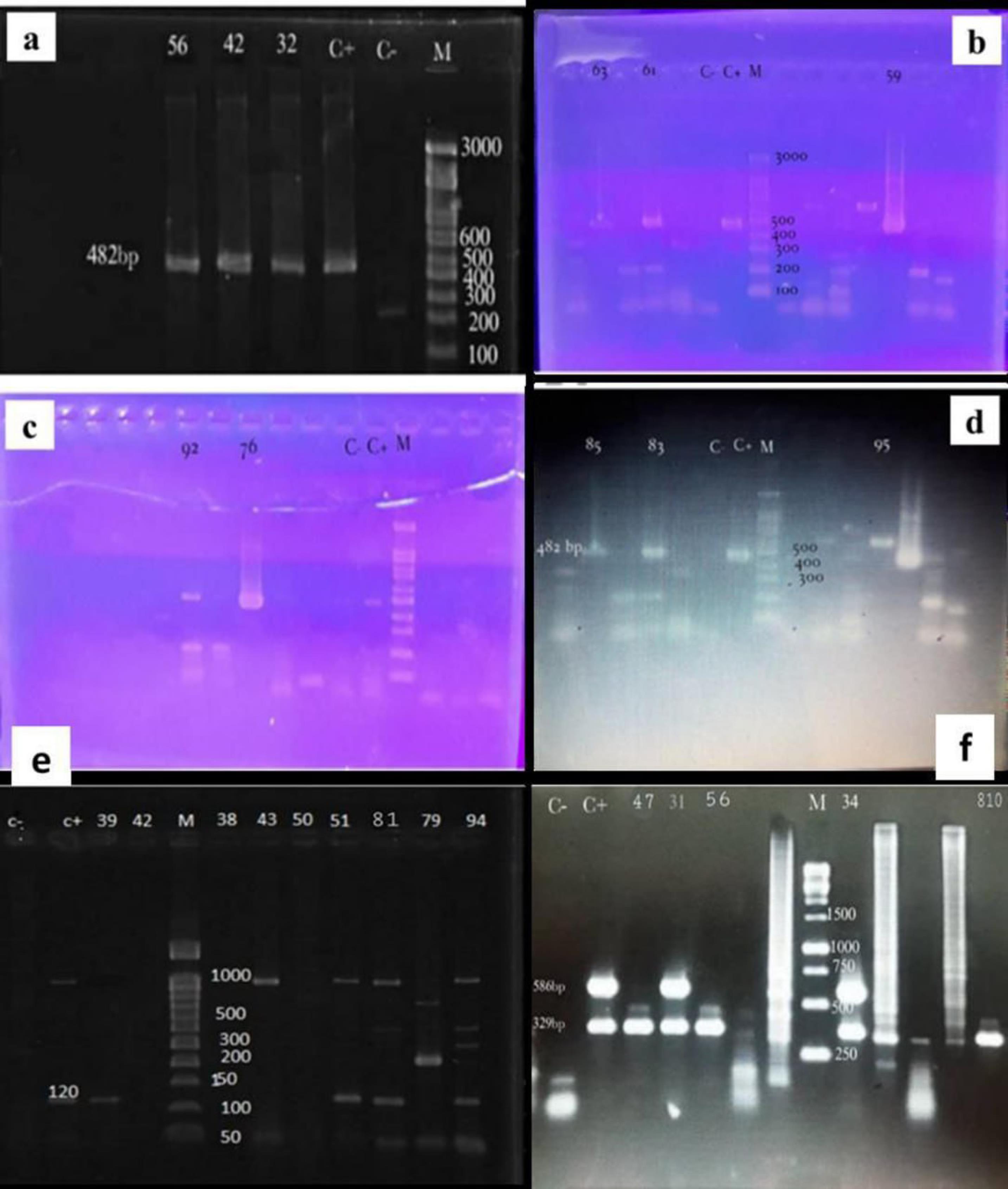
Figure 1.
(A-F). Multiplex PCR Assays for Detecting eae (482 bp), stx1 + stx2 (518 bp),elt (273 bp),and estA2-4 (120 bp) Genes on 1.5% Agarose Gel. Note. PCR: Polymerase chain reaction; E. coli: Escherichia coli. M: Marker (100 bp), C +: E. coli ATCC 35218 and E. coli O111, and other wells contained DNA extracted from E. coli isolates
.
(A-F). Multiplex PCR Assays for Detecting eae (482 bp), stx1 + stx2 (518 bp),elt (273 bp),and estA2-4 (120 bp) Genes on 1.5% Agarose Gel. Note. PCR: Polymerase chain reaction; E. coli: Escherichia coli. M: Marker (100 bp), C +: E. coli ATCC 35218 and E. coli O111, and other wells contained DNA extracted from E. coli isolates
Table 2.
Frequency (%) of Virulence Genes (eae, sth, and stx1 + stx2) Among 58 Escherichia coli Isolates
|
Virulence Gene
|
Frequency
|
Valid Percentage
|
Total
|
|
eae
|
No |
38 |
65.6 |
58 |
| Yes |
20 |
34.4 |
| Total |
58 |
100.0 |
|
sth
|
No |
38 |
65.6 |
58 |
| Yes |
20 |
34.4 |
| Total |
58 |
100.0 |
|
stx1 + stx2 |
No |
53 |
91.4 |
58 |
| Yes |
5 |
8.6 |
| Total |
58 |
100.0 |
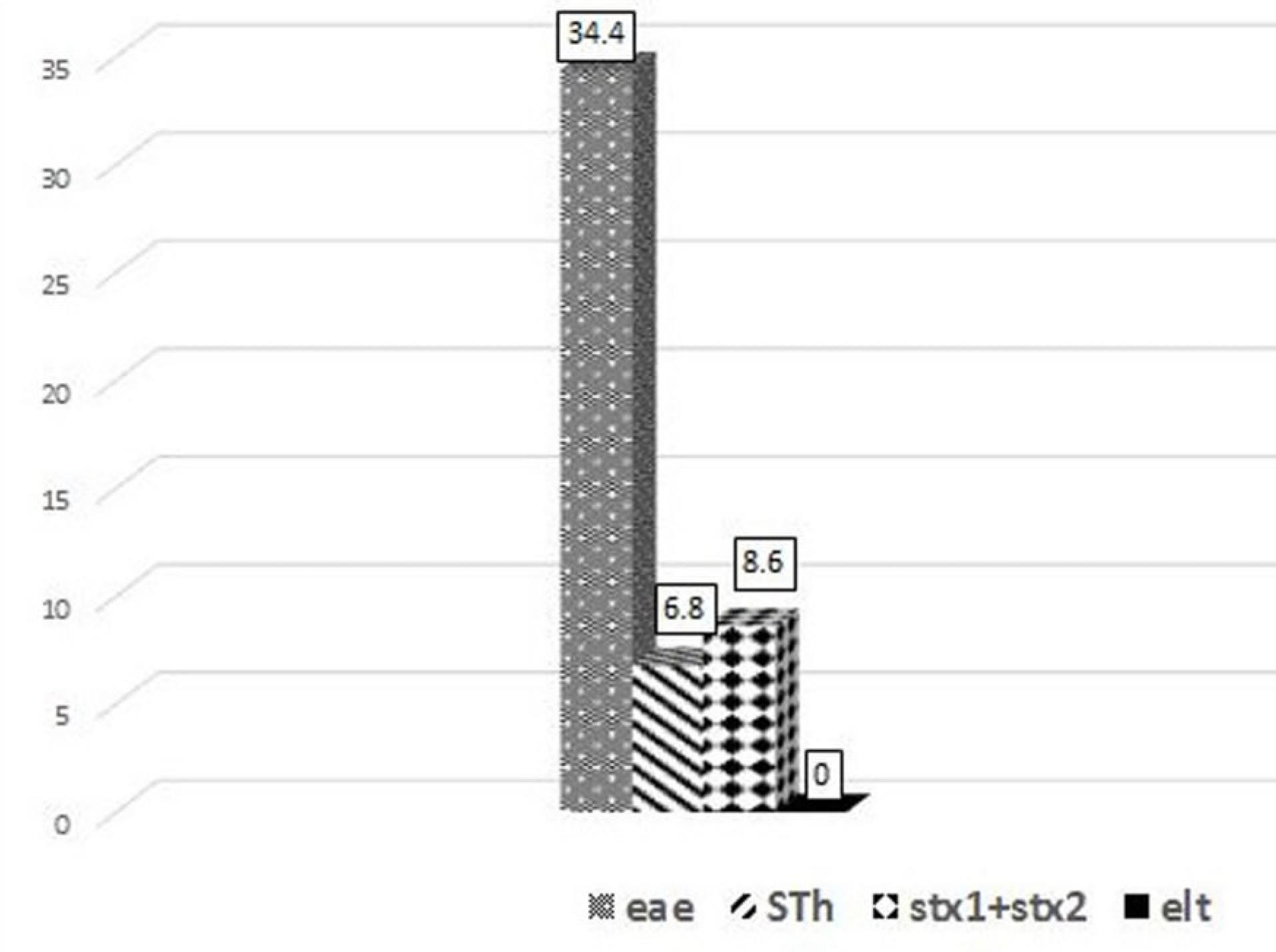
Figure 2.
Frequency of eae, sth, stx1 + stx2, and elt Virulence Genes Among Understudied 58 Escherichia coli Isolates
.
Frequency of eae, sth, stx1 + stx2, and elt Virulence Genes Among Understudied 58 Escherichia coli Isolates
Antibiotic Resistance Profile of Escherichia coli Isolates
The analysis conducted on the intended strains via the antibiogram technique revealed notable findings concerning their response to commonly used antibiotics. Statistical analysis was performed to determine the relative prevalence of antibiotic resistance (Figure 3, Table 3). Among the isolates, 37 (63.7%), 23 (39.6%), 30 (51.7%), 25 (56.8%), 11 (18.9%), 25 (56.8%), and 44 (75.8%), 26 (44.8%), 39 (67.2%), 49 (84.4%), and 21 (36.2%) were resistant to STP, KAN, IMP, CTX, CAZ, CFPM, AMP, AMX, SXT, TE, and AZM, respectively (Table 3). In addition, all isolates (100%) were resistant to ERY.
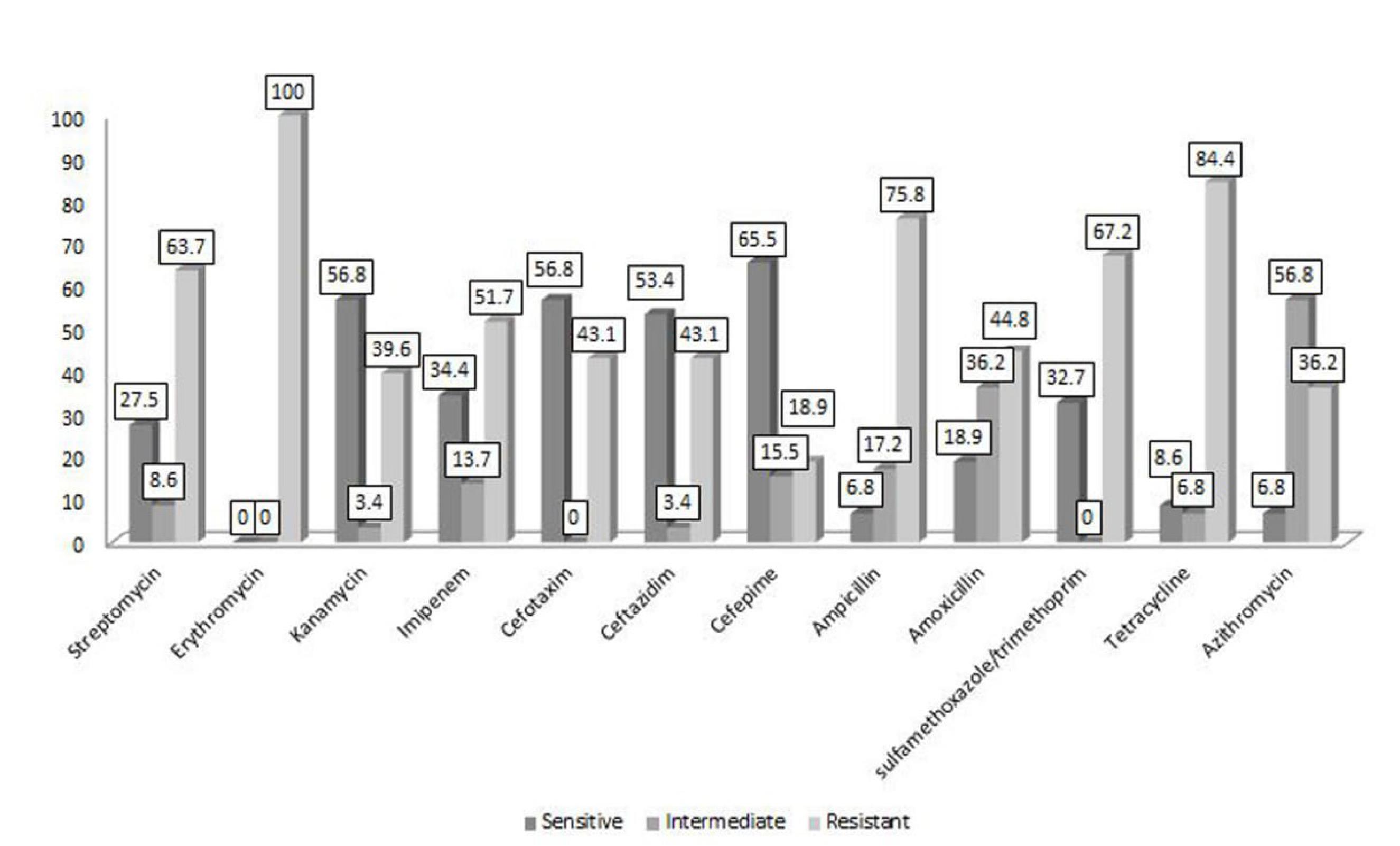
Figure 3.
Relative Abundance of Antibiotic Susceptibility Pattern of 58 Escherichia coli Isolates to Different Classes of Antibiotics
.
Relative Abundance of Antibiotic Susceptibility Pattern of 58 Escherichia coli Isolates to Different Classes of Antibiotics
Table 3.
Antimicrobial Susceptibility Patterns of Escherichia coli Isolates
|
Antimicrobial Agents
|
Sensitive
n (%)
|
Intermediate
n (%)
|
Resistant
n (%)
|
| Ampicillin |
4 (6.8) |
10 (17.2) |
44 (75.8) |
| Amoxicillin |
11 (18.9) |
21 (36.2) |
26 (44.8) |
| Azithromycin |
4 (6.8) |
33 (56.8) |
21 (36.2) |
| Imipenem |
20 (34.4) |
8 (13.7) |
30 (51.7) |
| Cefotaxime |
33 (56.8) |
- |
25 (43.1) |
| Ceftazidime |
31 (53.4) |
2 (3.4) |
25 (43.1) |
| Cefepime |
38 (65.5) |
9 (15.5) |
11 (18.9) |
| Tetracycline |
5 (8.6) |
4 (6.8) |
49 (84.4) |
| Streptomycin |
16 (27.5) |
5 (8.6) |
37 (63.7) |
| Erythromycin |
- |
- |
58 (100) |
| Kanamycin |
33 (56.8) |
2 (3.4) |
23 (39.6) |
| Sulfamethoxazole |
19 (32.7) |
- |
39 (67.2) |
Based on pathotype determination, out of 25 virulence gene-positive isolates, 92% (n = 23) were detected as MDR, and among them, four showed extensive resistance to all tested antibiotics. The MARI of the isolates against the selected antibiotics is presented in Table 4. The study results demonstrated that the MARI of virulence gene-positive isolates was between 0.25 and 1.
Table 4.
Antibiotic Resistance Profiles by Pathotype Determination
|
Isolate No.
|
Pathotype
|
Number of Antibiotics
|
MARI
|
Antibiotic Resistance Profile of Pathotypes
|
| R.3.1 |
EHEC |
10 |
0.83 |
ERY, STP, KAN, IPM, CAZ, CFPM, AMX, SXT, TE, and AZM |
| R.3.2 |
EPEC |
9 |
0.75 |
ERY, KAN, IPM, CTX, CAZ, CFPM, AMX, SXT, and AZM |
| R.3.5 |
EPEC |
8 |
0.66 |
ERY, KAN, IPM, CTX, CAZ, CFPM, AMP, and SXT |
| R.4.2 |
EPEC |
10 |
0.83 |
ERY, STP, KAN, IPM, CTX, CAZ, CFPM, AMX, SXT, and AZM |
| R.4.3 |
ETEC |
8 |
0.66 |
ERY, KAN, IPM, CTX, CFPM, AMP, AMX, and SXT |
| R.4.7 |
EPEC |
10 |
0.83 |
ERY, KAN, IPM, CTX, CAZ, CFPM, AMP, AMX, SXT, and AZM |
| R.5.1 |
ETEC |
4 |
0.33 |
ERY, STP, KAN, and CTX |
| R.5.3 |
EPEC |
12 |
1 |
ERY, STP, KAN, IPM, CTX, CAZ, CFPM, AMP, AMX, SXT, TE, and AZM |
| R.5.6 |
EPEC, EHEC |
9 |
0.75 |
ERY, KAN, IPM, CTX, CAZ, CFPM, AMX, AMP, and AZM |
| R.5.9 |
EPEC |
12 |
1 |
ERY, STP, KAN, IPM, CTX, CAZ, CFPM, AMP, AMX, SXT, TE, and AZM |
| R.5.10 |
EPEC |
8 |
0.66 |
ERY, KAN, IPM, CTX, CAZ, CFPM, AMP, and AZM |
| R.6.1 |
EPEC |
2 |
0.16 |
ERY and TE |
| R.6.3 |
EPEC |
3 |
0.25 |
ERY, KAN, and IPM |
| R.6.7 |
EPEC |
6 |
0.5 |
ERY, KAN, IPM, CTX, CFPM, and AZM |
| R.6.8 |
EPEC |
9 |
0.75 |
ERY, STP, KAN, IPM, CTX, CFPM, AMX, and AZM |
| R.7.4 |
EPEC |
7 |
0.58 |
ERY, KAN, IPM, CTX, CFPM, AMX, and AZM |
| R.7.6 |
EPEC |
4 |
0.33 |
ERY, STP, KAN, and IPM |
| R.8.1 |
ETEC |
1 |
0.083 |
ERY |
| R.8.3 |
EPEC |
12 |
1 |
ERY, STP, KAN, IPM, CTX, CAZ, CFPM, AMP, AMX, SXT, and AZM |
| R.8.4 |
EPEC |
7 |
0.58 |
ERY, STP, KAN, CTX, CAZ, CFPM, and TE |
| R.8.5 |
EPEC |
6 |
0.5 |
ERY, IPM, CTX, CAZ, CFPM, and AZM |
| R.8.10 |
EHEC |
10 |
0.83 |
ERY, STP, KAN, IPM, CTX, CAZ, CFPM, AMP, AMX, and AZM |
| R.8.14 |
EPEC |
6 |
0.5 |
ERY, CTX, CAZ, CFPM, AMX, and AZM |
| R.9.2 |
EPEC |
9 |
0.75 |
ERY, KAN, IPM, CTX, CAZ, CFPM, AMP, AMX, and AZM |
| R.9.4 |
ETEC |
12 |
1 |
ERY, STP, KAN, IPM, CTX, CAZ, CFPM, AMP, AMX, SXT, TE, and AZM |
Note. MARI: Multiple antibiotic resistance index; ETEC: Enterotoxigenic; EPEC: Enteropathogenic; EHEC: Enterohemorrhagic. STP: Streptomycin (10 μg); ERY: Erythromycin (15 μg); KAN: Kanamycin (30 μg); CTX: Cefotaxime (30 μg); IMP: Imipenem (10 μg); AMX: Amoxicillin (10 μg); AMP: Ampicillin (10 μg); CAZ: Ceftazidime (30 μg); CFPM: Cefepime (30 μg); TE: Tetracycline (30 μg); AZM: Azithromycin (15 μg); SXT: Sulfamethoxazole/trimethoprim (1.25/23.75 μg).
Relationship Between the Presence of Virulence Genes and Antibiotic Resistance Status
The correlation between genes and resistance/susceptibility/intermediate status to antibiotics underwent examination. Gene presence effect on intermediate/susceptibility status to antibiotics and resistance/susceptibility status were separately analyzed, and the results indicated that the presence of the eae gene increased the chance of intermediate status regarding STP (odds ratio [OR]: 1.467, confidence interval [CI]: 0.18-11.71), IMP (OR: 1.222, CI: 0.237-6.315), AMP (OR: 1.125, CI: 0.082-15.506), AMX (OR: 1.333, CI: 0.267-6.653), and TE (OR: 1.500, CI: 0.106-21.312). However, the presence of this gene decreased the chance of intermediate status for CFPM (OR: 0.857, CI: 0.187-3.977), although not statistically significant (P > 0.05). The presence of the sth gene could increase the chance of intermediate status for STP (OR: 3.750, CI: 0.190-74.065), but it was not statistically significant. The presence of the stx1 + stx2 gene increased the chance of intermediate status for IMP (OR: 0.847, CI: 0.100-16.537), CFPM (OR: 3.333, CI: 0.467-23.774), and AMX (OR: 2.353, CI: 0.230-24.095) but decreased resistance to AMP (OR: 2.353, CI: 0.230-24.095) and AZM (OR: 0.414, CI: 0.034-10.253), without statistical significance (P > 0.05). Investigating the relationship between gene presence and resistance/susceptibility status to antibiotics showed that the presence of the eae gene increased the chance of resistance to STP (OR: 1.192, CI: 0.340-4.177), AMP (OR: 1.778, CI: 0.170-18.569), and AMX (OR: 1.667, CI: 0.356-7.808). Conversely, it decreased the chance of resistance to KAN (OR: 0.479, CI: 0.150-1.526), IMP (OR: 0.372, CI: 0.110-1.262), ceftriaxone (CAX; OR: 0.824, CI: 0.274-2.473), CAZ (OR: 0.538, CI: 0.174-1.663), CFPM (OR: 0.643, CI: 0.146-2.829), SXT (OR: 0.857, CI: 0.273-2.695), TE (OR: 0.727, CI: 0.110-4.796), and AZM (OR: 0.750, CI: 0.088-6.388), without statistical significance. The presence of the sth gene could increase the chance of resistance to KAN (OR: 1.476, CI: 0.193-11.316), IMP (OR: 2.111, CI: 0.204-21.873), CAX (OR: 1.348, CI: 0.177-10.292), CAZ (OR: 4.091, CI:0.398-42.007), and AMX (OR: 1.304, CI: 0.120-14.119) but decreased it to STP (OR: 0.857, CI: 0.072-10.189), CFPM (OR: 4.000, CI: 0.494-32.393), and SXT (OR: 0.450, CI: 0.060-3.542), without statistical significance. Based on the results, the presence of the stx1 + stx2 gene increased the chance of resistance to IMP (OR: 0.643, CI: 0.083-4.981) while decreasing resistance to STP (OR: 0.618, CI: 0.093-4.106), CAX (OR: 0.302, CI: 0.032-2.886), AMP (OR: 0.146, CI: 0.010-2.116), SXT (OR: 0.708, CI: 0.108-4.641), and TE (OR: 0.356, CI: 0.032-3.991), without statistical significance. In conclusion, the study examined the relationship between pathotypes and antibiotic resistance profiles in E. coli isolates, providing detailed insights into resistance patterns and gene associations.
Discussion
The presence of pathogenic E. coli in wastewater from slaughterhouses is a significant public health concern. Slaughterhouses are critical points in the food production chain, where animal waste, blood, and other by-products can contaminate the surrounding environment. This wastewater often contains various E. coli pathotypes, including enterotoxigenic (ETEC), enteropathogenic (EPEC), and enterohemorrhagic (EHEC) strains, which are known to cause severe gastrointestinal diseases in humans (15). The improper treatment and disposal of this wastewater can lead to the dissemination of these pathogens into water bodies, posing risks to both human health and the ecosystem (13). Moreover, the emergence of MDR E. coli strains further complicates the situation. Antibiotic resistance in E. coli is a growing global concern, as it limits treatment options for infections and increases the risk of severe disease outcomes (16). The presence of virulence genes in these isolates can enhance their pathogenic potential, leading to increased morbidity and mortality rates associated with infections (17). Understanding the correlation between virulence factors and antibiotic resistance is essential for developing effective strategies to mitigate these risks. Despite the critical nature of this issue, there is a lack of comprehensive studies focusing on the molecular identification of E. coli pathotypes in slaughterhouse wastewater and their antibiotic resistance profiles. This research filled this gap by isolating and characterizing common E. coli pathotypes found in such environments. By determining their antibiotic resistance patterns, the study could provide valuable insights into the public health implications of wastewater management practices in slaughterhouses. Ultimately, the findings could inform policy decisions and promote better management strategies to reduce the risk of pathogen transmission through contaminated water sources, thereby protecting public health and ensuring food safety (18). In summary, it was necessary to address the pressing issue of E. coli contamination in slaughterhouse wastewater, understand the associated health risks, and contribute to the development of effective control measures against antibiotic-resistant strains.
In current research, the analysis of virulence genes in E. coli isolates provided significant insights into the pathogenicity and potential health risks associated with these bacteria. Based on the findings, 58 isolates were obtained, identifying 20 (34.4%), 5 (8.6%), and 4 (6.8%), respectively, as positive for the eae (EPEC), stx1 + stx2 (EHEC), and estA2-4 (ETEC) genes, with no isolates positive for the elt gene. This distribution aligns with the findings in recent literature, highlighting the prevalence of EPEC and EHEC isolates in various populations (15). A study on E. coli from healthy pigs reported that virulence genes can be present even in non-pathogenic strains, suggesting a reservoir of potential pathogenicity in commensal populations. This underscores the need for monitoring pathogenic strains and commensal ones that may acquire virulence factors (19). Recent studies have further emphasized this point, demonstrating that virulence factors such as papC and sfa are prevalent among E. coli isolates from various environments, including clinical and agricultural settings (20). Another review emphasized the diversity of E. coli pathotypes and their virulence mechanisms, noting that different strains share common virulence factors, complicating the assessment of their clinical significance. This is consistent with the findings that the same virulence genes can be associated with multiple pathotypes (21). The prevalence of virulence genes in the studied E. coli isolates reflects broader trends observed in recent literature, highlighting the complexity of E. coli pathogenicity. Comparatively, the results of a study conducted by Jahantigh et al on E. coli strains isolated from diarrheal patients in Zahedan confirmed a high resistance rate to antibiotics such as AMP and TE (22), which conforms to our findings regarding significant resistance among our isolates. These findings support our observation of MDR strains. Continued research into the virulence profiles of both pathogenic and commensal strains is essential for understanding their roles in human health and disease.
The antibiotic resistance profile of E. coli isolates from the study revealed significant resistance rates to typically used antibiotics. In general, 58 isolates were resistant to STP (63.7%), KAN (39.6%), IMP (51.7%), and noticeably ERY (100%). In addition, 92% of virulence gene-positive isolates were MDR, with four isolates representing extensive resistance to each of the tested antibiotics. The MARI for these isolates ranged between 0.25 and 1, indicating a concerning level of resistance. A recent study reported that E. coli isolates from clinical and environmental samples showed high susceptibility to amikacin and meropenem, contrasting with the high resistance rates observed in the current study, particularly susceptibility to AMP (81.4%) and SXT (70.7%). This disparity highlights regional variations in resistance patterns, necessitating localized surveillance (23). The results related to the prevalence of MDR E. coli corroborate the findings of the study by Boerlin et al, indicating that 57% of the isolates from healthy pigs were resistant to two or more antimicrobials (24). This suggests a broader trend of increasing MDR among E. coli across different environments, emphasizing the need for stringent antibiotic stewardship. The finding of a study examining resistance across different age groups revealed that resistance rates varied significantly based on the source of the isolate (blood, urine, or sputum) and patient age (25), which conforms to the current findings, confirming that the context of infection plays a crucial role in resistance profiles. The findings of this study underscore the alarming levels of antibiotic resistance in E. coli isolates, particularly among virulence gene-positive strains. The high rates of MDR and specific resistance to critical antibiotics highlight the urgent need for ongoing monitoring and tailored treatment strategies to combat the rising threat of antibiotic-resistant infections.
Evaluating the relationship between virulence genes and intermediate/susceptible resistance profiles demonstrated thatthe presence of the eae gene increased the odds of intermediate resistance to STP, IMP, AMP, AMX, and TE but decreased it to CFPM, although not statistically significant.The estA2-4 gene could increase the odds of intermediate resistance to STP, but not significantly.Based on the results,the stx1 + stx2 genes increased the odds of intermediate resistance to IMP, CFPM, and AMX but decreased it to AMP and AZM without statistical significance. Regarding the relationship between virulence genes and resistance/susceptibility, the eae gene could increase the odds of resistance to STP, AMP, and AMX but could decrease the chance of resistance to KAN, IMP, CAX, CAZ, CFPM, SXT, TE, and AZM without statistical significance. The estA2-4 gene increased the odds of resistance to KAN, IMP, CAX, CAZ, and AMX. Contrarily, it decreased the odds of resistance to STP, CFPM, and SXT without statistical significance. The stx1 + stx2 genes could increase the odds of resistance to IMP but decrease it to STP, CAX, AMP, SXT, and TE, without statistical significance. The findings of a study on E. coli from healthy pigs revealed that the odds of detecting virulence genes were rarely increased by the presence of antimicrobial resistance genes, suggesting that on-farm antibiotic use was not selected for the examined virulence factors in commensal E. coli (26). Another study reported that the presence of virulence factors, such as hemolysin production, was significantly associated with resistance to certain antibiotics in uropathogenic E. coli isolates (27). While the findings of the current study demonstrated no statistically significant associations between virulence genes and antibiotic resistance, the observed trends suggest potential relationships that warrant further investigation with larger sample sizes. Understanding the interplay between virulence and resistance is crucial for developing targeted interventions to combat the spread of antibiotic-resistant E. coli infections.
Conclusion
The findings of this study underscore the critical public health risks posed by pathogenic E. coli in slaughterhouse wastewater. The identification of multiple virulence genes and high antibiotic resistance rates, particularly the alarming 100% resistance to ERY, highlights the urgent need for improved wastewater management practices. These resistant strains not only threaten the health of slaughterhouse workers but also pose risks of environmental contamination and potential entry into the food chain. Future research should focus on developing effective treatment strategies to mitigate these risks and protect public health from MDR pathogens.
Acknowledgments
The authors of this manuscript thank the Department of Biology, East Tehran Branch, Islamic Azad University, Tehran, Iran, for valuable assistance in this research.
Competing Interests
The authors declare that they have no conflict of interests.
Ethical Approval
The ethical permission for the present study was obtained from the Ethics Committee of East Tehran Branch, Islamic Azad University, Tehran, Iran (IR.IAU.ET.REC.1400.034).
Funding
The authors received no funding or support for the publication of this study.
References
- Zweifel C, Baltzer D, Stephan R. Microbiological contamination of cattle and pig carcasses at five abattoirs determined by swab sampling in accordance with EU Decision 2001/471/EC. Meat Sci 2005; 69(3):559-66. doi: 10.1016/j.meatsci.2004.10.007 [Crossref] [ Google Scholar]
- Ayoade F, Olayioye EO. Microbiological assessment of housekeeping practices and environmental impact of selected abattoirs in Lagos and Ogun states of Nigeria. J Appl Biosci 2016; 99:9363-72. doi: 10.4314/jab.v99i1.2 [Crossref] [ Google Scholar]
- Nafarnda WD, Ajayi IE, Shawulu JC, Kawe MS, Omeiza GK, Sani NA. Bacteriological quality of abattoir effluents discharged into water bodies in Abuja, Nigeria. ISRN Vet Sci 2012; 2012:515689. doi: 10.5402/2012/515689 [Crossref] [ Google Scholar]
- Nwanta JA, Onunkwo J, Ezenduka E. Analysis of Nsukka metropolitan abattoir solid waste and its bacterial contents in south eastern Nigeria: public health implication. Arch Environ Occup Health 2010; 65(1):21-6. doi: 10.1080/19338240903390263 [Crossref] [ Google Scholar]
- Abiade-Paul CU, Kene IC, Chah KF. Occurrence and antibiogram of Salmonellae in effluent from Nsukka municipal abattoir. Niger Vet J 2005; 27(1):48-53. [ Google Scholar]
- Rivas M, Chinen I, Guth BE. Enterohemorrhagic (Shiga toxin-producing) Escherichia coli. In: Torres AG, ed. Escherichia coli in the Americas. Cham: Springer; 2016. p. 97-123. doi: 10.1007/978-3-319-45092-6_5.
- Ravi A, Avershina E, Ludvigsen J, L’Abée-Lund TM, Rudi K. Integrons in the intestinal microbiota as reservoirs for transmission of antibiotic resistance genes. Pathogens 2014; 3(2):238-48. doi: 10.3390/pathogens3020238 [Crossref] [ Google Scholar]
- Liu C, Liu Y, Feng C, Wang P, Yu L, Liu D. Distribution characteristics and potential risks of heavy metals and antimicrobial resistant Escherichia coli in dairy farm wastewater in Tai’an, China. Chemosphere 2021; 262:127768. doi: 10.1016/j.chemosphere.2020.127768 [Crossref] [ Google Scholar]
- Atieno NR, Owuor OP, Omwoyo O. Isolation of high antibiotic resistant fecal bacteria indicators, Salmonella and Vibrio species from raw abattoirs sewage in peri-urban locations of Nairobi, Kenya. Greener J Biol Sci 2013; 3(5):172-8. [ Google Scholar]
- Olatoye IO, Amosun EA, Ogundipe GA. Multidrug resistant Escherichia coli O157 contamination of beef and chicken in municipal abattoirs of Southwest Nigeria. Nat Sci 2012; 10(8):125-32. [ Google Scholar]
- Akpan SN, Odeniyi OA, Adebowale OO, Alarape SA, Adeyemo OK. Antibiotic resistance profile of gram-negative bacteria isolated from Lafenwa abattoir effluent and its receiving water (Ogun River) in Abeokuta, Ogun state, Nigeria. Onderstepoort J Vet Res 2020; 87(1):e1-8. doi: 10.4102/ojvr.v87i1.1854 [Crossref] [ Google Scholar]
- Um MM, Barraud O, Kérourédan M, Gaschet M, Stalder T, Oswald E. Comparison of the incidence of pathogenic and antibiotic-resistant Escherichia coli strains in adult cattle and veal calf slaughterhouse effluents highlighted different risks for public health. Water Res 2016; 88:30-8. doi: 10.1016/j.watres.2015.09.029 [Crossref] [ Google Scholar]
- Diallo AA, Brugère H, Kérourédan M, Dupouy V, Toutain PL, Bousquet-Mélou A. Persistence and prevalence of pathogenic and extended-spectrum beta-lactamase-producing Escherichia coli in municipal wastewater treatment plant receiving slaughterhouse wastewater. Water Res 2013; 47(13):4719-29. doi: 10.1016/j.watres.2013.04.047 [Crossref] [ Google Scholar]
- Ayaz ND, Gencay YE, Erol I. Phenotypic and genotypic antibiotic resistance profiles of Escherichia coli O157 from cattle and slaughterhouse wastewater isolates. Ann Microbiol 2015; 65(2):1137-44. doi: 10.1007/s13213-014-0961-5 [Crossref] [ Google Scholar]
- Yu D, Ryu K, Zhi S, Otto SJG, Neumann NF. Naturalized Escherichia coli in wastewater and the co-evolution of bacterial resistance to water treatment and antibiotics. Front Microbiol 2022; 13:810312. doi: 10.3389/fmicb.2022.810312 [Crossref] [ Google Scholar]
- Foyle L, Burnett M, Creaser A, Hens R, Keough J, Madin L. Prevalence and distribution of antimicrobial resistance in effluent wastewater from animal slaughter facilities: a systematic review. Environ Pollut 2023; 318:120848. doi: 10.1016/j.envpol.2022.120848 [Crossref] [ Google Scholar]
- Adefisoye MA, Okoh AI. Identification and antimicrobial resistance prevalence of pathogenic Escherichia coli strains from treated wastewater effluents in Eastern Cape, South Africa. Microbiologyopen 2016; 5(1):143-51. doi: 10.1002/mbo3.319 [Crossref] [ Google Scholar]
- Wang L, Wakushima M, Aota T, Yoshida Y, Kita T, Maehara T. Specific properties of enteropathogenic Escherichia coli isolates from diarrheal patients and comparison to strains from foods and fecal specimens from cattle, swine, and healthy carriers in Osaka city, Japan. Appl Environ Microbiol 2013; 79(4):1232-40. doi: 10.1128/aem.03380-12 [Crossref] [ Google Scholar]
- Chapman TA, Wu XY, Barchia I, Bettelheim KA, Driesen S, Trott D. Comparison of virulence gene profiles of Escherichia coli strains isolated from healthy and diarrheic swine. Appl Environ Microbiol 2006; 72(7):4782-95. doi: 10.1128/aem.02885-05 [Crossref] [ Google Scholar]
- Luo S, Liao C, Peng J, Tao S, Zhang T, Dai Y. Resistance and virulence gene analysis and molecular typing of Escherichia coli from duck farms in Zhanjiang, China. Front Cell Infect Microbiol 2023; 13:1202013. doi: 10.3389/fcimb.2023.1202013 [Crossref] [ Google Scholar]
- Cabal A, García-Castillo M, Cantón R, Gortázar C, Domínguez L, Álvarez J. Prevalence of Escherichia coli virulence genes in patients with diarrhea and a subpopulation of healthy volunteers in Madrid, Spain. Front Microbiol 2016; 7:641. doi: 10.3389/fmicb.2016.00641 [Crossref] [ Google Scholar]
- Jahantigh M, Seyedzayi N. Dominant EAEC and Widespread Antibiotic Resistance among Diarrheagenic Escherichia coli in Children with Acute Diarrhea in Zahedan, Iran. Journal of Medical Microbiology and Infectious Diseases 2024; 12(1):59-66. doi: 10.61186/JoMMID.12.1.59 [Crossref] [ Google Scholar]
- Kasanga M, Shempela DM, Daka V, Mwikisa MJ, Sikalima J, Chanda D. Antimicrobial resistance profiles of Escherichia coli isolated from clinical and environmental samples: findings and implications. JAC Antimicrob Resist 2024; 6(2):dlae061. doi: 10.1093/jacamr/dlae061 [Crossref] [ Google Scholar]
- Boerlin P, Travis R, Gyles CL, Reid-Smith R, Janecko N, Lim H. Antimicrobial resistance and virulence genes of Escherichia coli isolates from swine in Ontario. Appl Environ Microbiol 2005; 71(11):6753-61. doi: 10.1128/aem.71.11.6753-6761.2005 [Crossref] [ Google Scholar]
- Noyes V. An in Vitro Analysis of the Relative Efficacies of Antibiotic Solutions vs. Antiseptics in Breast Augmentation and Reconstruction Surgery [dissertation]. Chattanooga: University of Tennessee at Chattanooga; 2018.
- Nguyen TD, Vo TT, Vu-Khac H. Virulence factors in Escherichia coli isolated from calves with diarrhea in Vietnam. J Vet Sci 2011; 12(2):159-64. doi: 10.4142/jvs.2011.12.2.159 [Crossref] [ Google Scholar]
- Chakraborty AK, Roy AK. High Prevalence of Metal Resistant Genes in Salmonella enterica MDR Plasmids Correlates Severe Toxicities of Water with higher Typhoid AMR. Preprints. April 20, 2020. Available from: https://www.preprints.org/manuscript/202004.0358/v1.